Receipts attached 1 source
Sources
-
Other source
Boston Public Library
Limits
Single primary institutional source; no independent validation of promotional claims. Check current operator information before travel.
Corrections
No correction notes have been added for this article.
Boston library cards are not limited to people with a Boston address. Its published eligibility rules extend to people who live, work or own property in Massachusetts, and to students living in the state while attending school. For newcomers, the important distinction is between access to a building, access to digital resources and permission to borrow physical items. Read the official Boston Public Library guidance.
The library says visitors do not need a card simply to use its facilities. A card becomes necessary when borrowing from its collections. That makes a first visit possible before the paperwork is settled, rather than turning registration into an entrance requirement.
Digital access and a physical card are different
An eCard can be obtained online and provides access to the library’s electronic resources. It does not allow the holder to borrow physical books, DVDs or museum passes. Someone who wants those items needs to upgrade to a physical card in person. An existing physical card already includes eCard benefits; the library says those holders do not need a separate digital registration.
For an in-person application, BPL asks for picture identification and proof of a Massachusetts address. A Massachusetts driver’s license or state ID meets both requirements. Other applicants can bring suitable picture identification and official mail showing their Massachusetts address. Students whose permanent homes are elsewhere can qualify while living in Massachusetts to attend school.
A route for visiting researchers
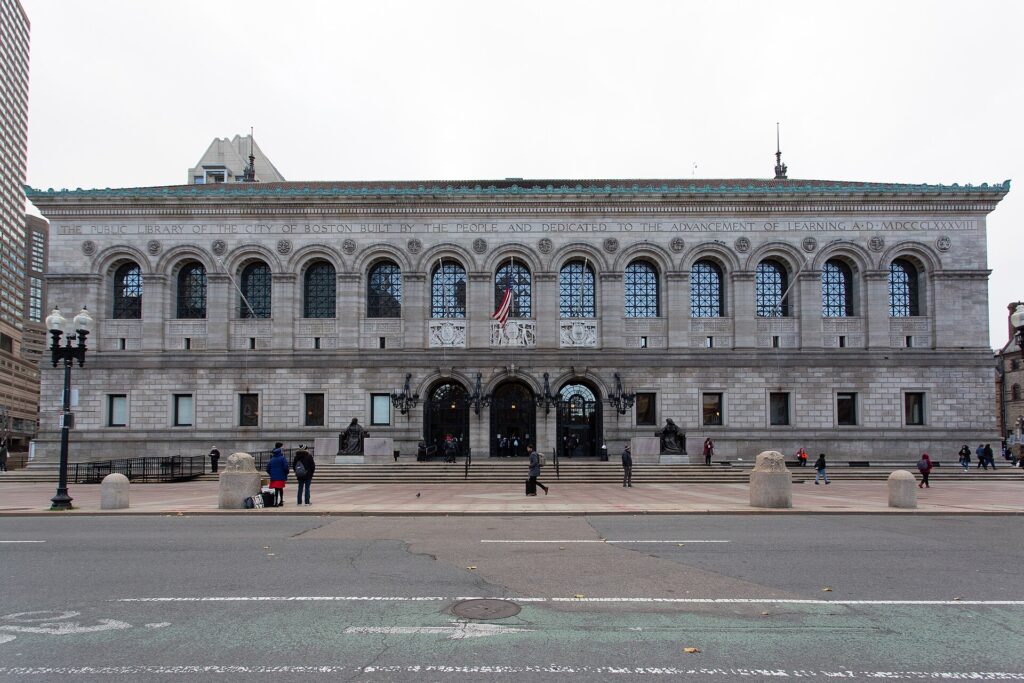
The system makes a separate provision for people who do not live in Massachusetts and want to consult material. A free research card, available at the Central Library in Copley Square, permits use of materials inside the library. BPL asks for photo identification and a document showing the applicant’s current address.
The distinction matters for short visits. The library says short-term residents are not eligible for an eCard, but points them toward an in-person research card. Anyone planning extensive research should contact the library’s research staff before traveling to discuss the material they need.
This is a practical guide to the library’s own rules, not a guarantee that a particular application will be accepted. Check the linked eligibility page before assembling documents, and ask library staff about unusual residency or identification circumstances.
Boston library cards for different circumstances
The first step is to identify which eligibility route applies to you. BPL lists living in Massachusetts, living there for most of the year while attending school, working for a Massachusetts employer and owning real estate in the state as routes to an eCard. Those categories are not interchangeable with the evidence needed at an in-person registration desk. A worker who lives elsewhere should read the linked eligibility guidance for that situation rather than assume a residential document is the only possible route.
Applicants without a Massachusetts driver’s license or state ID should pay particular attention to the alternative identification rule. BPL specifies identification showing a picture and signature, together with official mail sent to a Massachusetts address. The library accepts residency evidence as a physical document or an official document available on an electronic device. That distinction can help someone preparing a first visit decide which records to bring.
There are separate arrangements for younger readers. BPL says children aged 12 and under can receive a card with a parent or guardian’s signature. Older applicants are directed to bring photo identification and residency evidence. Groups planning to register together are encouraged to complete the application in advance. These are registration provisions, not restrictions on who may enter a library building.
A lack of a stable address does not make the building unavailable. The library states that its facilities are free to all and that a temporary computer guest pass can be requested at a service desk. It also says many area shelters can supply official letters supporting eligibility for a borrowing card. Someone in that situation should ask staff about the appropriate evidence instead of abandoning an application because the standard document list does not fit.
For another way to explore educational resources in the Boston area, see our MIT OpenCourseWare guide.
Service guide. Official information checked October 10, 2026; check the linked operator pages before making plans.